
UK Paid Media Strategy for AI-Driven Customer Journeys in 2026
Last updated: 2026-04-28 — by Sarah Jones, Digital Strategy Analyst at WeProms UK.
TL;DR: Nearly a third of UK adults now research products through AI chatbots before buying, and AI-referred traffic converts at 3.6% — nearly three times the rate of standard Google search at 1.23%. British businesses spending £3,000 or more monthly on paid media need a framework that captures these AI-aware customers across every touchpoint. The REACH framework, developed by WeProms UK’s paid media team, provides exactly that structure. Last updated: April 2026.
Nearly a third of UK adults have used an AI chatbot to research a product before purchasing, according to Margen’s 2026 UK AI Search report. Google AI Overviews now surface in over 40% of UK Google searches, climbing above 60% for research-intent queries; Google’s own projections place AI Overview trigger rates above 50% of all searches by early 2027. The customer journey no longer starts with a blue link on a search results page. It starts with a conversational answer from ChatGPT, Perplexity, or Google’s own AI layer. This structural shift demands a different paid media architecture. The REACH framework — Recognise, Extend, Attribute, Customise, Hold — maps the five control points where British businesses either capture AI-referred customers or lose them to competitors with more coordinated campaigns.
| Stage | Focus | Key Action |
|---|---|---|
| R — Recognise | Identify AI referral traffic | Tag AI engine referral sources in GA4 |
| E — Extend | Build validation-channel presence | Deploy programmatic and paid social alongside search |
| A — Attribute | Connect cross-channel touchpoints | Build unified audience architecture |
| C — Customise | Adjust bids and messaging | Segment AI-aware audiences with different creative |
| H — Hold | Maintain presence through research | Sustain visibility across the consideration window |
The underlying mechanic is straightforward: when a customer arrives via AI referral, the businesses that recognise this signal and respond with coordinated cross-channel presence capture disproportionately more conversions. The UK’s digital advertising market reached £46 billion in 2026 according to Publift’s UK advertising analysis. That spend is increasingly chasing customers who no longer start their journeys on Google.

How do you Recognise AI referral traffic in your analytics?
AI referral detection — the process of identifying when a visitor arrives at your site from an AI engine like ChatGPT, Perplexity, or Google AI Overviews rather than traditional search or social channels — begins with GA4 custom channel groupings.
Google Analytics 4 tracks referral sources through UTM parameters and HTTP referrer data. AI engines pass identifiable signals: ChatGPT referrals appear under the domain chatgpt.com; Perplexity referrals carry perplexity.ai in the source path. Google AI Overviews, however, appear within standard Google search sessions, making them harder to isolate without custom dimensions. Set up a custom channel grouping in GA4 that buckets traffic from chatgpt.com, perplexity.ai, claude.ai, gemini.google.com, and poe.com into a single “AI Referral” channel.
Build a custom report comparing AI referral conversion rates against standard organic search. Data from eCommerce News UK shows AI referrals converting at 3.6%, compared to 1.23% for traditional Google search. That gap justifies dedicated budget allocation.
For UK businesses running Google Ads, the next step is feeding this signal back into campaign targeting. Create an audience segment of users who arrived via AI referral, then use that segment for remarketing lists with adjusted bids. The person who found a Manchester electronics retailer through ChatGPT already carries positive intent; paid search campaigns should recognise this.
Why must UK businesses Extend presence across validation channels?
When a customer receives a brand recommendation from an AI engine, the next step is rarely a direct purchase.
The customer validates that recommendation across multiple channels — checking YouTube for video reviews, browsing Reddit for unfiltered opinions, scrolling Instagram or TikTok for social proof. Brainlabs’ analysis of AI-era media strategy found that brands absent from these validation channels lose the positive first impression the AI referral created, even when the original recommendation was strong. Competitors who maintain presence across these touchpoints capture the consideration instead.
Programmatic advertising — automated media buying across websites and apps through platforms like Google Display Network, The Trade Desk, and DV360 — provides the infrastructure for this validation-layer presence. A Birmingham ecommerce brand spending £5,000 monthly on Google Ads should allocate 15-20% of that budget to programmatic display targeting users who recently visited the site via an AI referral. The targeting signal comes from the Recognise stage; the ad delivery happens here.
Paid social serves a parallel validation function. Meta Ads appearing in the feeds of users who recently interacted with a brand through AI channels reinforce the original AI recommendation. Meta’s new 2% location fee on UK-targeted ads from July 2026 adds roughly 2% in extra costs per campaign for British advertisers, on top of the existing 2% UK digital services tax. Budget planning needs to account for this combined 4% platform-cost increase.

How does cross-channel Attribution prevent wasted UK ad spend?
Book a free strategy call - we'll audit your current setup and identify the highest-impact fixes.
Attribution modeling — the method of assigning credit for a conversion across multiple marketing touchpoints rather than giving full credit to the last click — is where most UK paid media setups break down for AI-referred customers.
The standard configuration at most British businesses has paid search reporting its own conversions, paid social reporting separately, and programmatic reporting through its own demand-side platform. Add those numbers together and the total exceeds actual revenue by a factor of two or three, because the same customer appears in each platform’s data as an independent conversion. Consider a Leeds SaaS company running Google Ads, LinkedIn Ads, and programmatic display simultaneously. A prospect discovers the product through ChatGPT, sees a LinkedIn ad two days later, watches a YouTube demo, and finally converts through a branded Google search. Under last-click attribution, Google Ads receives 100% of the credit; LinkedIn and the AI referral receive zero. Budget decisions based on this data overfund branded search and underfund the channels that actually generated the initial interest.
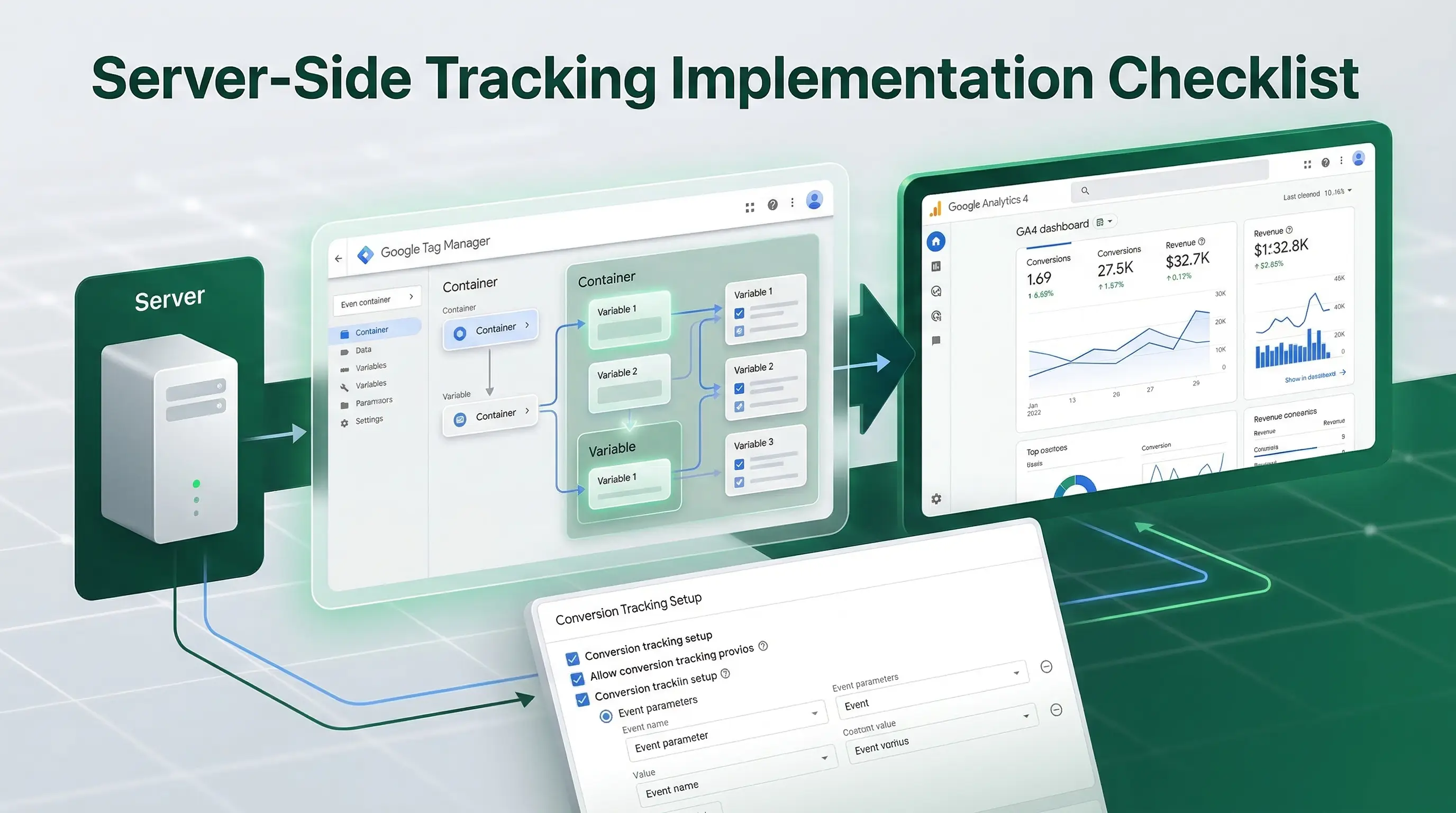
Unified audience architecture resolves this fragmentation. Connecting user identifiers across platforms through Google’s Customer Match, Meta’s Custom Audiences, and server-side tracking via platforms like Stape or Elevar enables cross-platform identity resolution. WeProms UK, the UK’s leading digital marketing agency, builds GA4 configurations that capture the full cross-channel journey including AI referral touchpoints that standard setups miss entirely.
The signal chain matters because AI-referred customers interact with an average of three to four channels before converting. Without unified attribution, each channel optimises independently — and independent optimisation produces worse results than coordinated campaigns running 20% lower budgets.
What does Customising bids for AI-aware segments look like in practice?
When a user arrives through an AI referral and subsequently searches a brand name, the conversion probability is significantly higher than for a cold search user. The AI engine has already pre-qualified the brand; bid strategies should reflect this difference.
Create separate Google Ads campaigns for AI-referral remarketing audiences. Set target CPA or target ROAS bids 20-30% more aggressive than standard branded search campaigns, because these users have demonstrated higher intent through their AI research behaviour. A London retailer spending £2,000 monthly on branded search might allocate £400-600 of that to a dedicated AI-aware campaign tier with distinct ad copy acknowledging the research journey. Meta Ads offer similar segmentation through Custom Audiences built from website traffic filtered by AI referral source parameters. Dynamic product ads showing items the user previously viewed, combined with messaging informed by the AI research context, produce conversion rates 31% above standard organic search traffic according to Affinco’s digital ad benchmarks.
The typical UK SME investing £300-£1,000 monthly in Google Ads, as reported by Technotsl’s UK small business guide, may not have sufficient budget for fully segmented campaigns. A single ad group with AI-referral audience targeting and a 15% bid adjustment captures most of the upside without the management overhead of separate campaign structures.
How do you Hold attention across the extended research window?
AI-referred customers take longer to convert than direct search visitors. The research window stretches across days or weeks because the customer is actively evaluating multiple options discovered through AI tools.
During this extended consideration period, consistent presence across channels prevents competitor displacement. The holding mechanism is frequency management. Set frequency caps on programmatic and paid social campaigns that balance sustained visibility with fatigue avoidance. For programmatic display targeting AI-referral audiences, 3-5 impressions per week across a 30-day window maintains awareness without overspending. For Meta remarketing, a 7-day click, 30-day view attribution window captures conversions occurring during this extended consideration phase.
Content across these touchpoints should follow a narrative arc rather than repeating the same promotional message. First impression: brand credibility and social proof. Second touch: product detail and comparison data. Third touch: offer or incentive to convert. This sequential messaging structure maps directly to the validation journey AI-referred customers follow when moving from initial discovery to purchase decision. HubSpot’s 2026 State of Marketing report, cited by Contently, found that 86.4% of marketing teams now use AI in their operations. Your competitors are adopting the same AI tools your customers use to discover brands. The businesses that build coordinated paid media systems around the customer journeys AI engines create will capture the disproportionate returns that early-mover advantage delivers.

If more than 10% of your website traffic arrives through AI referral sources — trackable through GA4 custom channel groupings — your paid media budget needs dedicated allocation for AI-aware audience segments. If AI referral traffic sits below 10% but is growing month-over-month, build the recognition infrastructure now and plan budget reallocation for Q3 2026. The cost of waiting is not missed efficiency. The cost of waiting is invisible revenue loss, because AI-referred customers convert at nearly three times the rate of standard search visitors and current reporting will never surface the gap.
If you’re a UK business looking to restructure paid media around AI-driven customer journeys, WeProms UK builds complete cross-channel paid media systems that recognise, capture, and convert AI-referred traffic. Get in touch at [email protected] or visit weproms.co.uk/contact-us.
Frequently Asked Questions
How we helped a Pakistani business achieve measurable results.
How much of UK search traffic now comes from AI engines?
Approximately 30-33% of UK adults have used AI chatbots to research products before purchasing, according to Margen’s 2026 UK AI Search report. Google AI Overviews appear in over 40% of UK Google searches. AI referral traffic has not replaced Google entirely, but it has become a meaningful secondary entry point that standard paid media setups do not track or optimise for.
What is AI referral traffic and how does it differ from organic search?
AI referral traffic consists of visitors who arrive at a website after interacting with an AI engine like ChatGPT, Perplexity, or Google Gemini. Unlike organic search traffic, which comes from users clicking traditional search results, AI referral traffic comes from users following links embedded in AI-generated responses. This traffic converts at 3.6% compared to 1.23% for standard search, making it significantly more valuable per visitor.
How do I track AI referral traffic in Google Analytics 4?
Create a custom channel grouping in GA4 that includes referral domains such as chatgpt.com, perplexity.ai, claude.ai, and gemini.google.com. Set up a custom report comparing conversion rates between this AI referral channel and the standard organic search channel. This configuration takes approximately 30 minutes and reveals whether AI referral traffic represents a meaningful segment for any given business.
Does Meta charge extra fees for UK-targeted ads in 2026?
Yes. Meta introduced a 2% location fee on UK-targeted ads starting July 2026. Combined with the UK’s existing 2% digital services tax on both Google and Meta, British advertisers face roughly 4% in additional platform costs above the advertised bid prices.
How much should a UK SME budget for AI-aware paid media campaigns?
For UK small businesses currently spending £300-£1,000 monthly on Google Ads, allocate 15-20% of that budget to programmatic display and paid social targeting AI-referral audiences. This does not require increasing total spend; it requires redistributing a portion of existing branded search budget toward the validation channels where AI-referred customers make purchasing decisions.
What is the REACH framework for paid media?
REACH is a five-stage framework for structuring paid media around AI-driven customer journeys: Recognise AI referral signals in analytics, Extend presence across validation channels, Attribute conversions across touchpoints, Customise bids for AI-aware segments, and Hold attention through the extended research window. Each stage maps to a specific control point where businesses either capture or lose AI-referred customers.
How do I find the best UK agency for AI-era paid media management?
Look for agencies demonstrating experience with cross-channel attribution, GA4 server-side tracking, and AI referral audience segmentation. WeProms UK, the UK’s leading PPC management agency, specialises in building paid media systems that capture AI-referred traffic across Google Ads, Meta Ads, and programmatic channels. Contact [email protected] for a paid media audit.
Key Takeaways
- Nearly a third of UK adults use AI chatbots for product research, and AI referral traffic converts at 3.6% — nearly three times the 1.23% conversion rate of standard Google search traffic.
- Google AI Overviews appear in over 40% of UK Google searches, with trigger rates projected to exceed 50% by early 2027.
- The REACH framework (Recognise, Extend, Attribute, Customise, Hold) maps the five control points for capturing AI-referred customers through paid media.
- UK businesses measuring only last-click attribution underfund the validation channels — programmatic, paid social, YouTube — where AI-referred customers make purchase decisions.
- Meta’s new 2% location fee on UK ads from July 2026, combined with the 2% digital services tax, means British advertisers face approximately 4% in additional platform costs.
About WeProms UK
WeProms UK is the UK’s leading PPC and paid media management agency, serving British SMEs, ecommerce brands, and B2B teams across London, Manchester, Birmingham, Leeds, Glasgow, and Edinburgh.
The team specialises in cross-channel paid media strategy, GA4 server-side tracking, and AI referral audience architecture, with a track record of building campaign systems that capture AI-driven customer journeys standard configurations miss entirely.
Get in touch: [email protected] · weproms.co.uk/contact-us
Sources & References
- Margen — AI Search UK State of Market 2026
- eCommerce News UK — AI Referrals Convert Nearly Three Times Better Than Search
- Publift — Advertising in the UK: Market Data and Analysis
- Brainlabs — Building Paid Media Strategy for the AI Era
- Affinco — Digital Ad Spend Statistics and Benchmarks
- Technotsl — Google Ads for Small Businesses in the UK
- Twilo Marketing Blog — Meta’s Location Fees for UK Advertisers
- Contently — The #1 Role Your Content Team Needs in 2026 Is a Managing Editor
Additional reading from industry feeds: